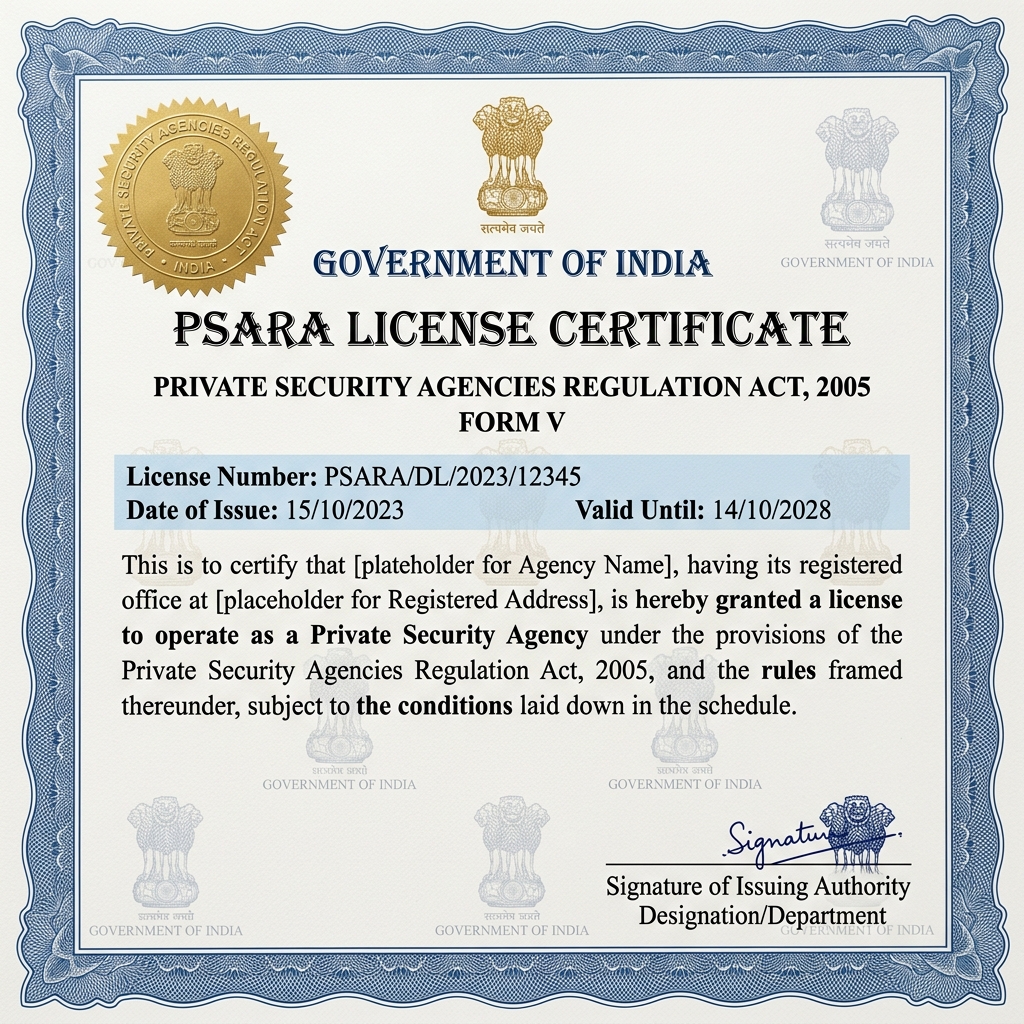
A complete compliance guide to the Private Security Agencies (Regulation) Act, 2005 (PSARA) in India. Learn about licensing criteria, training standards, police verification requirements, and compliance checklists for businesses hiring security services.
Understanding PSARA: The Law That Governs Private Security in India The Private Security Agencies (Regulation) Act, 2005—commonly known as PSARA —is the landmark legislation enacted by the Parliament of India to regulate and control the private security sector. With rapid urbanization and corporate growth, the demand for private security guards, cash transits, and facility protection has surged. To bring accountability and trust, PSARA mandates that no private security agency can operate without holding a valid state license and conforming to strict statutory compliance guidelines. For corporate offices, manufacturing hubs, banking branches, and residential communities, hiring a licensed security partner is not just a best practice—it is a legal necessity. Below is a comprehensive guide to understanding how the PSARA framework regulates security training, background verification, uniform design, and operations across India. Key Compliance Warning Under Section 20 of the PSARA Act 2005, any person or agency operating a private security business without a valid PSARA license is subject to imprisonment for up to one year, a heavy financial penalty, or both. Clients hiring unlicensed agencies can also be held liable for security vulnerabilities. The Multi-Step PSARA Licensing Workflow Securing a PSARA license is a thorough legal process. The controlling authority of each state reviews credentials before authorizing an agency to offer security guards or services. The typical licensing process follows these critical stages: Figure: The step-by-step regulatory workflow required to obtain a PSARA License from state controlling authorities. Key Provisions and Regulatory Standards The PSARA framework imposes strict parameters on agencies regarding the onboarding, training, and deployment of security personnel: 1. Mandatory Police Verification Every security guard and supervisor must undergo comprehensive police background verification (Form-I) to check for criminal records or...